🌙 Tracking bats through the night 🦇

Studying nocturnal species, such as bats, can sometimes be challenging… because we simply can’t see them 👀! So, how can we study their movements and behaviour?
👉 Technology becomes our greatest ally.
At @UMRPIMIT, we tracked bats over several nights to gain a better understanding of the movements of the Réunion free-tailed bat (Mormopterus francoismoutoui), as part of the COSTE project.
🔬 Our approach:
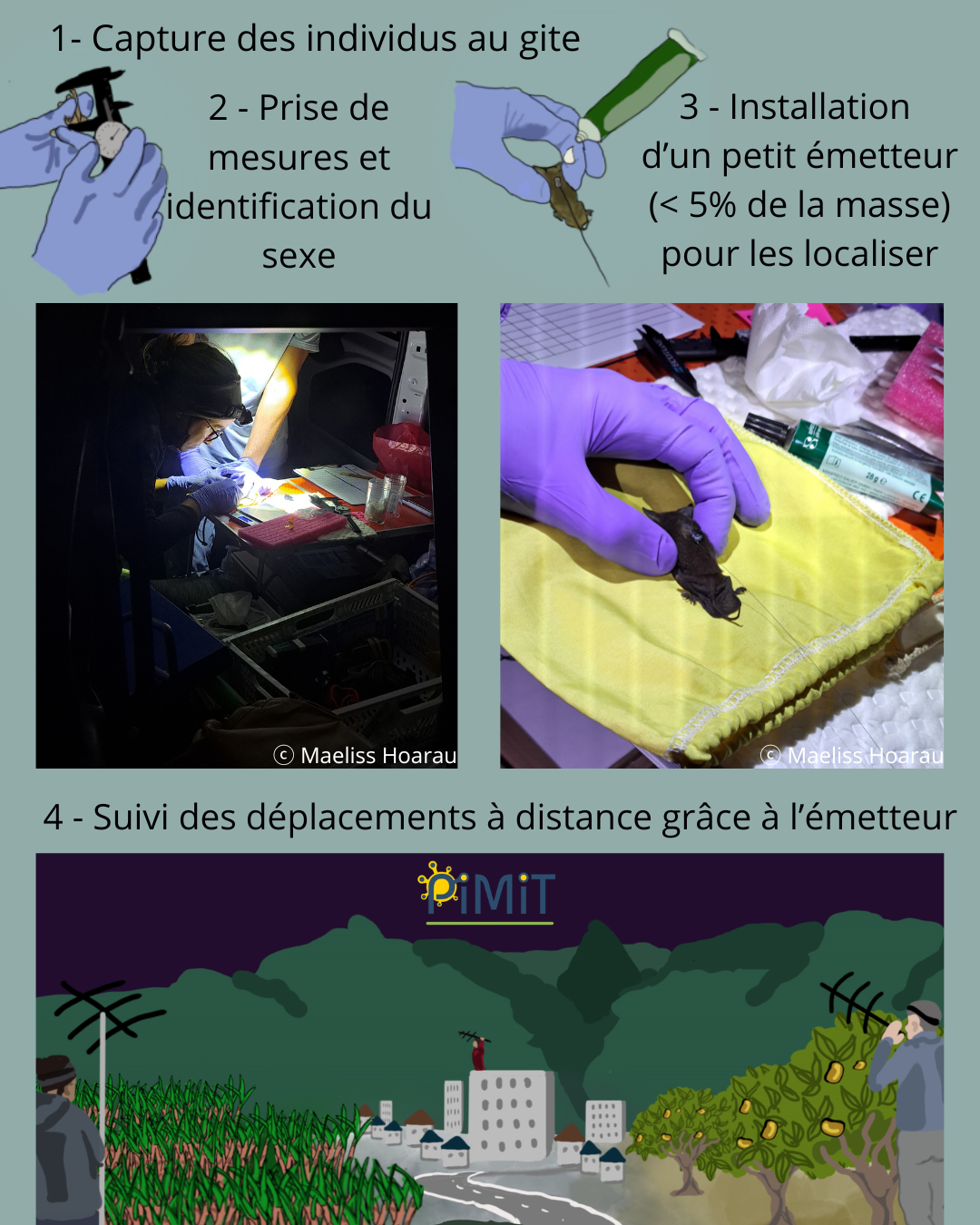
- Capturing individuals as they emerge from their roost (their daytime shelter)
- Attaching small VHF transmitters using non-invasive, temporary adhesive. Each transmitter weighs 0.32 g, staying within the 5% body mass guideline
- Releasing the bats and tracking their movements over several nights
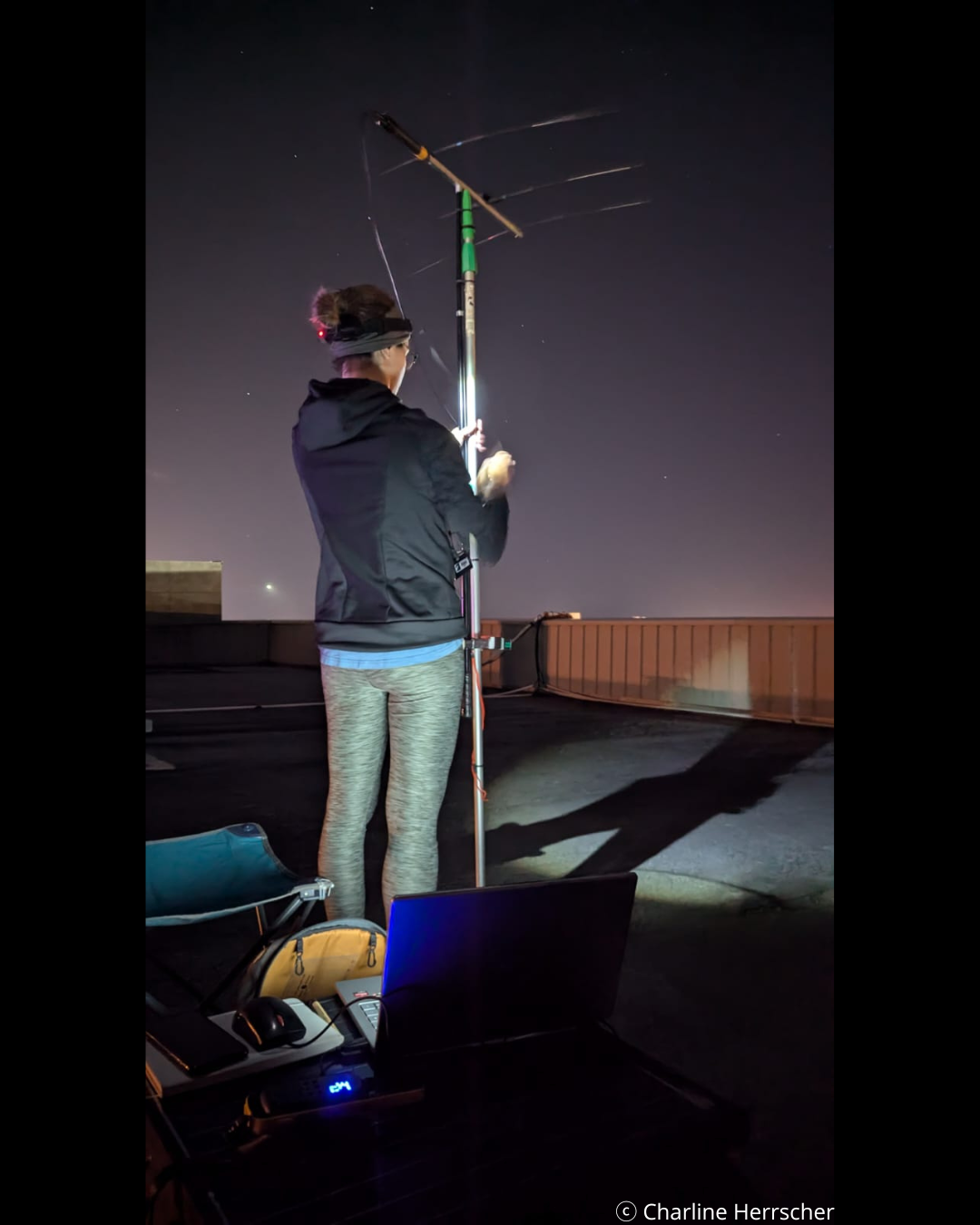
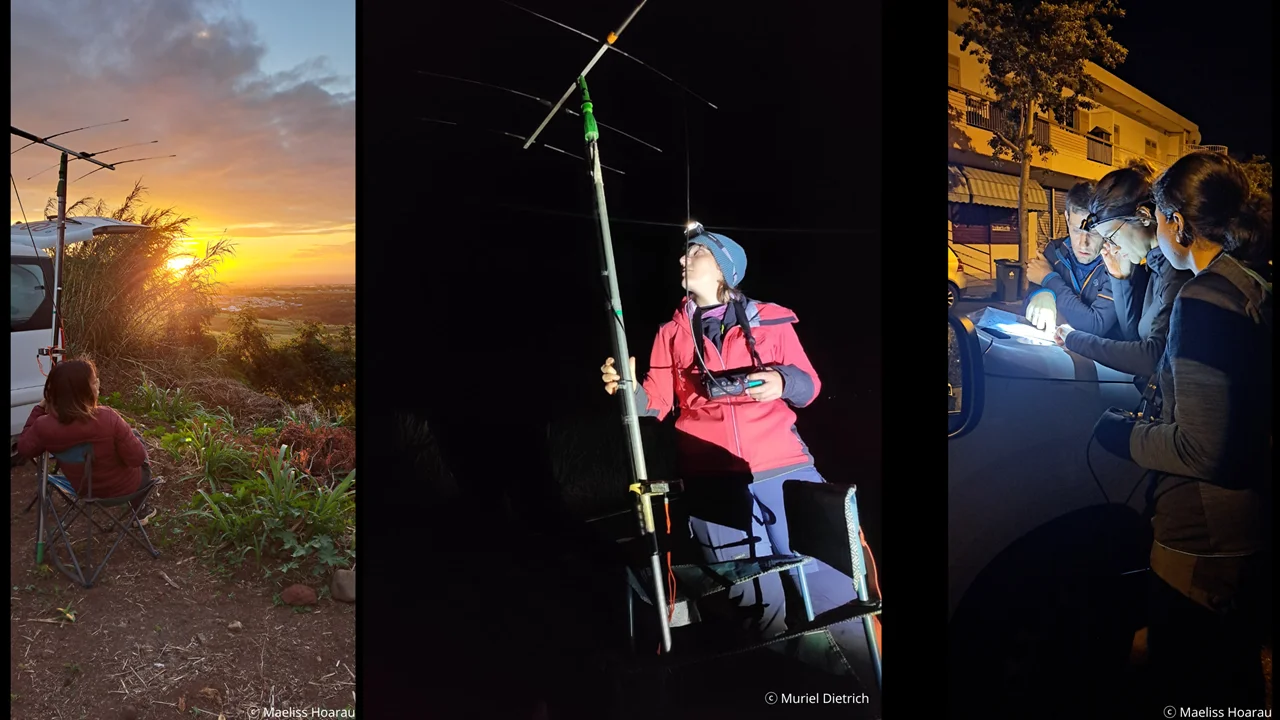
📡 In the field, we then used antennas and VHF receivers to detect signals and triangulate the bats’ positions in space.
🌍 Results:
This study revealed a previously little-known network of roosts and foraging areas, providing new insights into the biology of this fascinating species.
💚 All procedures were carried out with strict regard for animal welfare and were approved by an ethics committee. The handling of these bats was conducted under a special permit authorising the handling of this protected species.